
Hard Water Stains on Windows: Why They Keep Coming Back | Window Cleaning Guide
Hard Water Stains on Windows: Why They Keep Coming Back
What Causes Mineral Buildup and How It Affects Long-Term Glass Clarity
Few things diminish the appearance of clean windows faster than hard water stains. You wash the glass, wipe it down, and enjoy a clear view—only to notice cloudy spots, streaks, and mineral deposits returning weeks later.
For many homeowners and property managers, hard water stains are a recurring frustration. Understanding what causes these stubborn deposits and how they affect your windows over time can help you protect your investment and maintain crystal-clear glass.
What Are Hard Water Stains?
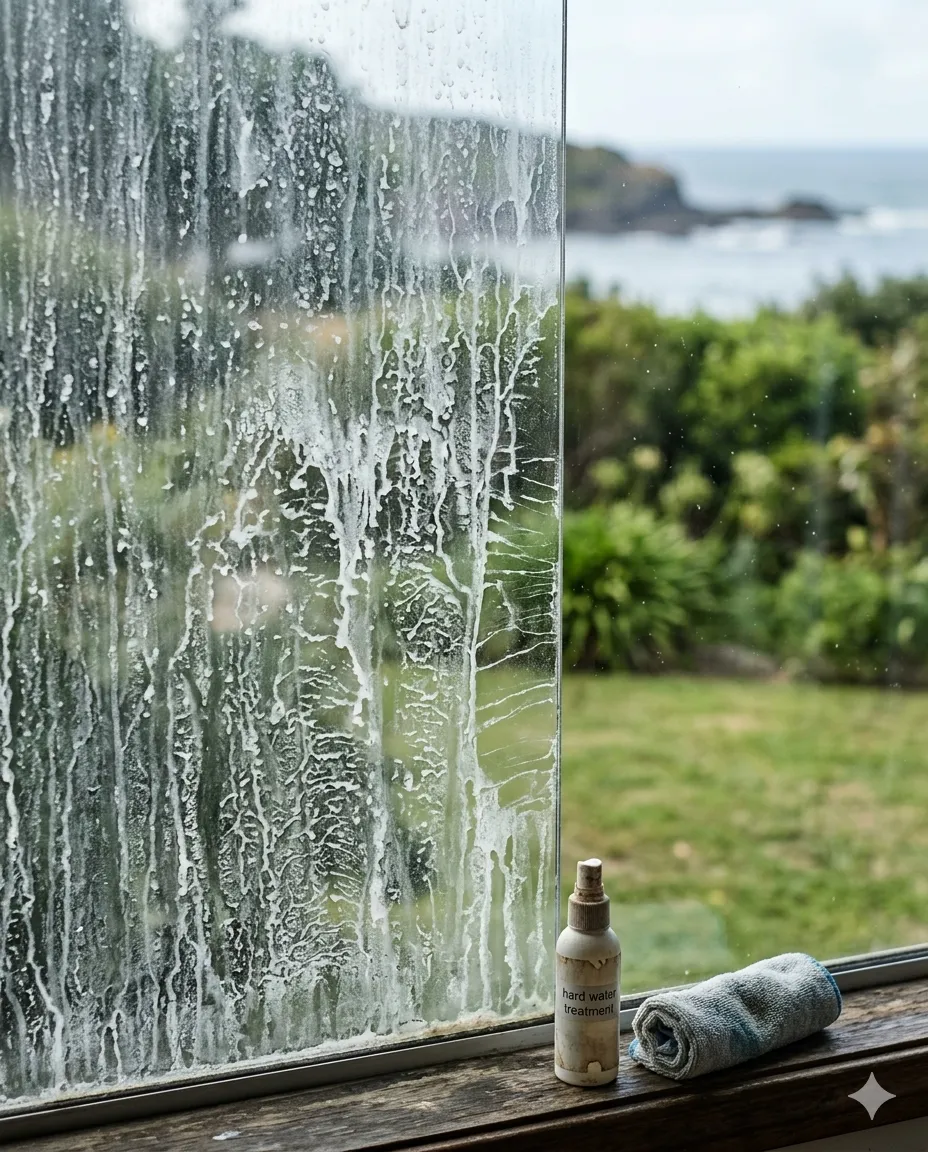
Hard water stains are mineral deposits left behind when water evaporates from a glass surface.
Water often contains naturally occurring minerals such as:
Calcium
Magnesium
Silica
Limestone particles
When water droplets dry on windows, these minerals remain behind, creating visible white, cloudy, or chalky spots.
The more frequently windows are exposed to mineral-rich water, the more severe the buildup can become.
Why Hard Water Stains Keep Returning
Many people assume hard water stains are caused by poor window cleaning. In reality, the issue often originates from ongoing exposure to mineral-rich water sources.
Common Causes of Recurring Hard Water Stains:
Lawn sprinkler overspray
Irrigation systems
Rainwater runoff
Hard municipal water supplies
Well water systems
Exterior washing without proper drying
Unless the source of the mineral deposits is addressed, stains are likely to return even after professional cleaning.
Sprinkler Systems Are a Major Contributor
One of the most common causes of hard water stains is sprinkler overspray.
When irrigation systems regularly spray windows, water droplets dry on the glass and leave mineral deposits behind.
Warning Signs of Sprinkler-Related Staining:
Spots concentrated on lower windows
Repeated staining in the same locations
White chalky residue
Increased buildup during summer months
Adjusting sprinkler heads can significantly reduce future mineral accumulation.
Rainwater Can Also Leave Mineral Deposits
Many homeowners are surprised to learn that rainwater can contribute to window staining.
As rainwater travels across:
Roof surfaces
Gutters
Exterior walls
Window frames
It can collect minerals, dirt, and environmental contaminants before reaching the glass.
When the water evaporates, residue remains behind.
The Difference Between Dirt and Hard Water Stains
Not all window spots are the same.
Dirt and Dust:
Sit on the surface
Easily removed through standard cleaning
Usually appear as smudges or streaks
Hard Water Stains:
Bond to the glass surface
Become increasingly difficult to remove
Often appear white or cloudy
Can etch glass over time
Because mineral deposits chemically adhere to glass, ordinary cleaning methods may not completely eliminate them.
How Hard Water Stains Affect Glass Clarity
Initially, hard water stains may seem like a cosmetic issue.
However, long-term mineral buildup can affect:
Window Appearance
Cloudy deposits reduce transparency and make windows look dirty even after cleaning.
Natural Light
Mineral accumulation can limit the amount of sunlight entering your home.
Curb Appeal
Spotted windows can negatively impact the overall appearance of a property.
Glass Condition
Over time, mineral deposits may permanently damage glass surfaces through a process called etching.
What Is Glass Etching?
Glass etching occurs when mineral deposits remain on windows for extended periods.
As minerals interact with the glass surface, they can create microscopic damage that becomes permanent.
Signs of Glass Etching:
Persistent cloudy areas
Surface roughness
Spots that remain after cleaning
Reduced clarity
Once etching occurs, complete restoration may require professional glass restoration or replacement.
Areas Most Vulnerable to Hard Water Stains
Certain windows experience more mineral exposure than others.
Common Problem Areas:
Windows near sprinkler systems
South-facing windows
Ground-level glass
Patio doors
Poolside windows
Exterior glass railings
Regular inspections can help identify early signs of buildup before permanent damage occurs.
How Professional Window Cleaning Helps
Routine professional window cleaning can significantly reduce mineral accumulation.
Benefits Include:
✔ Removal of surface deposits
✔ Improved glass clarity
✔ Better natural light transmission
✔ Enhanced curb appeal
✔ Early detection of developing stains
✔ Reduced risk of permanent etching
Professional cleaners often use specialized techniques and solutions designed to safely address mineral buildup.
Preventing Future Hard Water Stains
While hard water stains cannot always be completely avoided, homeowners can reduce their impact.
Prevention Tips:
Adjust Irrigation Systems
Prevent sprinklers from directly spraying windows.
Clean Windows Regularly
Routine cleaning removes deposits before they become severe.
Maintain Gutters and Downspouts
Proper drainage helps reduce water runoff across glass surfaces.
Monitor Water Sources
Homes with hard water may benefit from water treatment solutions.
Schedule Professional Cleaning
Consistent maintenance helps preserve long-term glass clarity.
Why Regular Maintenance Saves Money
Allowing hard water stains to accumulate can eventually lead to costly repairs.
Preventive maintenance helps:
Extend window lifespan
Reduce restoration costs
Maintain property appearance
Protect glass surfaces
Addressing mineral deposits early is often far more affordable than replacing damaged windows later.
Final Thoughts
Hard water stains keep coming back because the source of the mineral buildup often remains unchanged. Whether caused by sprinkler systems, rainwater runoff, or naturally hard water supplies, these deposits can gradually reduce glass clarity and even cause permanent damage if left untreated.
Regular window cleaning, proper maintenance, and early intervention are the best ways to keep your windows looking clear, bright, and beautiful year-round. By understanding the causes of hard water stains, homeowners can take proactive steps to protect both their windows and their property's curb appeal.